Redefining Financial Control: The Poulp Case Study.
Poulp™: what if the problem with financial management was never a lack of control?
01. The paradox that started the project
We have never had so many tools to manage our finances.
Today, it is possible to track every purchase in real time, automatically categorize expenses, connect different accounts, receive alerts, analyze charts, and discover in seconds exactly how much came in, how much went out, and where the money went.
Yet, financial anxiety remains a part of life for millions of Brazilians.
It was from this contradiction that we began building Poulp™.
When its founders arrived at Mosh, the product already carried an interesting ambition: to create a financial management experience that was more automatic, intelligent, and contextual than what existed on the market. Open Finance, artificial intelligence, and automation allowed for the reduction of much of the manual work that had turned financial apps into spreadsheets with better interfaces.
But having a technologically advanced product did not solve a bigger problem on its own.
Because when we looked at the category, almost every company seemed to start from the same premise: people have financial difficulties because they lack sufficient control.
So the market delivered more control. More dashboards. More charts. More categories. More goals. More notifications. More places to observe that something didn't go as it should have.
Technology evolved. The experience, not so much.
And it was in this space that the project really began to come to life.
02. A category that turned control into language
Categories create codes.
Over time, companies start using the same words, highlighting the same benefits, organizing products in similar ways, and resorting to the same creative references. What once emerged as something new begins, little by little, to feel like the rule.
In personal finance, this rule has become particularly visible.
Most brands talk about discipline, savings, goals, performance, organization, and control. Visually, numbers take center stage. Charts take up space. Interfaces need to look efficient. The communication teaches, alerts, corrects, and constantly reminds the user that there is something they should be doing better.
The problem is that financial life does not happen inside a dashboard.
It happens when someone decides to travel or stay home. When a couple tries to organize their expenses together. When an unexpected purchase comes up. When someone gets the biggest paycheck of their career. When they need to help their parents. When they want to celebrate an achievement but aren't sure if they "can." When they open their credit card statement fearing what they might find.
Money is an invisible infrastructure for a vast number of human decisions. And yet, the category had transformed this experience into a succession of numbers.
Our interpretation started right there: perhaps the problem wasn't just the amount of control people had, but the relationship they were being taught to build with their own money.
03. The question that reorganized Poulp
There is one question that has run through practically every decision in this project:
Why does organizing money remain an emotionally draining experience even when you have control?
It seems like a question about communication, but it wasn't.
It was a question about product, behavior, positioning, language, and experience.
Because if a person can know exactly how much they spent and still feel insecure about what to do next, information isn't enough. If they can receive a perfect report and still avoid opening the app, visualization isn't enough. And if every interaction with their finances reinforces guilt, surveillance, and a sense of helplessness, perhaps the problem lies precisely in the dynamic that the tool is helping to build.
In our strategy, we began to separate three different jobs that a person "hires" a financial solution to perform.
There is the functional: I want to organize my finances.
There is the emotional: I want to stop feeling anxious about money.
And there is the social: I want to be seen as someone who has their life under control.
Most of the category was focused almost exclusively on the first, but Poulp's opportunity lay in paying attention to all three.
From that point on, we stopped thinking only about financial management and started thinking about financial relationships.
04. From control to partnership
If the problem also lay in the relationship, the role the brand played needed to change.
Poulp couldn't behave like an institution observing your habits from above. Nor could it be that app that pops up twice a week to tell you that you’ve spent too much at restaurants.
Poulp needed to be on the same side as its user.
That’s how we arrived at the territory of intelligent financial partner: a combination of high automation, high contextualization, and a deeply human experience.
Technology remains at the core of the product's capability. Open Finance connects institutions. Automation eliminates manual work. Contextual AI allows for interpreting patterns and generating recommendations specific to each reality.
But none of these technologies needed to be the center of the brand's story. The center remained the person.
This led us to an extremely simple, yet purposefully bold and emotionally provocative promise: Stop fighting with your money.
The phrase organized something that had been scattered throughout the project. Poulp didn't need to promise wealth, impeccable discipline, or a financially perfect version of someone. It needed to help transform a relationship of conflict into a relationship of partnership.
And, starting from there, the brand's communication stopped correcting and started accompanying.
05. Turning finance into an experience someone wants to inhabit
After defining the strategic territory, another question arose:
How do you make a financial brand desirable, rather than just necessary?
This question guided much of the identity.
It would be relatively easy to build an elegant fintech. A good grid. Neutral typography. Lots of white space. Some reliable blue. Dashboard screenshots. Photographs of people smiling at laptops.
It would also be extremely easy to disappear among the better-known players, or those with more money to invest in distribution.
That is why Poulp's identity was not designed to replicate the look of a typical financial institution in the category. It was designed to create a universe of its own.
We chose purple as our core color in a category saturated by the literal codes of financial green and institutional blue. We built an extensive palette because Poulp needed room for emotion, product, community, and different moments of use.
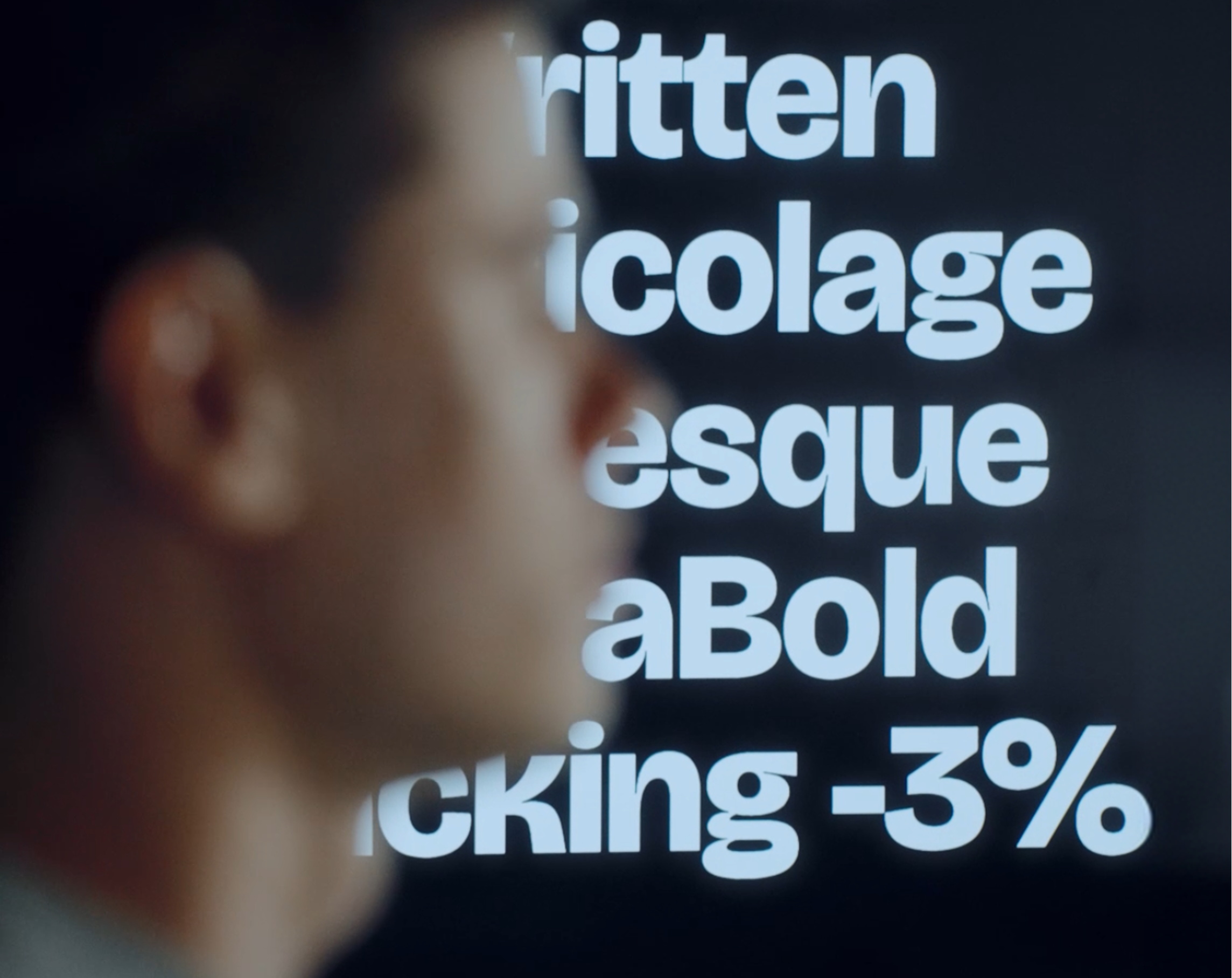
The Bricolage typeface brought personality as a first impression; Geist took over the functional layer where clarity and readability needed to speak loudest.
But perhaps one of the most important decisions was using illustration as a structural language. We transformed concepts usually presented through tables and numbers into a visual universe that is more tactile, expressive, playful, and at times, comical.
The illustrations aren't there to "make the brand fun," but to change the emotional temperature of the experience.
The same goes for photography. Instead of the artificial perfection of financial stock images, we built a direction that finds value in the everyday: homemade, grainy, analog, spontaneous images marked by movement, closeness, and imperfection.
06. Less alert. More of a friendly hug.
The shift in behavior also needed to appear in small interactions.
Financial brands have developed an impressive ability to turn notifications into little reprimands.
"You've exceeded your limit."
"Your spending has increased."
"Attention."
"Goal not met."
Individually, they seem like harmless messages. Repeated over months, they build a relationship.
At Poulp, we sought a different dynamic.
The information is still there. The intelligence is still analyzing. The alert still arrives when necessary.
But the form changes.
The brand can acknowledge an achievement. It can provide context before criticizing. It can use humor. It can speak like someone helping you understand a situation, rather than logging another error in your history.
This logic also appears in the UI Cards, which transform complex information into simpler, immediately understandable units.
The idea was never to hide numbers. It was to prevent the numbers from swallowing the experience.
07. From tool to ecosystem
At some point during the project, it became clear that Poulp could grow far beyond a single app.
When a brand has a strong enough thesis, it begins to pave new paths for the business.
That is how we structured an architecture capable of accommodating different products, audiences, and future possibilities.
Poulp Mind is born as the contextual intelligence layer: an AI capable of interpreting financial information within each person's specific reality.
Poulp Collab brings management to shared relationships, allowing couples, families, or partners to organize decisions together.
Poulp Partners creates a relationship layer with professionals and strategic partners.
Poulp Business brings the discussion of financial well-being into companies.
And Poulp Builders is perhaps the most interesting materialization of the project's cultural ambition: a community built not around people who "use a financial app," but around people who are building not only a healthier relationship with money, but also helping Poulp evolve as a market powerhouse.
At this point, Poulp stopped being viewed internally only by what the product was at that moment and started being observed by what it could become.
08. What changed after the project
The strategy we built began to directly influence discussions about the app's experience and evolution. The founders gained a common language for decision-making and a broader vision of the business's future possibilities. The system placed Poulp in a visual and narrative position that is hard to confuse with competitors on the shelf.
And, just a few weeks after launching this new phase, hundreds of users arrived at the product organically.
This number still represents the beginning of a much larger story, but it is an important sign.
Especially because Poulp didn't need to look like the rest of the category to be understood.
Quite the opposite.
Its true strength lay precisely in not looking like anyone else at all.
9. The biggest insight Poulp left for Mosh
There is a natural tendency in branding to seek differentiation on the surface.
A phrase no one uses. An unexpected typeface. A more informal tone of voice. A different symbol.
But projects like Poulp reinforce something we deeply believe in: relevant distinction almost never starts with isolated decisions. It starts with how a company interprets the problem it has decided to solve and transforms that into a unique and unlikely system.
While the category was asking how to give people more control, we chose to investigate why so much control still produced anxiety.
It was a small difference in how the question was framed that changed the entire answer.
It changed the positioning. It changed the promise. It changed the way of speaking. It changed the visual direction. It changed parts of the experience. It changed the product architecture. And it helped the founders themselves see the future they could build in a different way.
This is, perhaps, one of the definitions of branding that interests us most today.
Not the construction of a pretty shell around a business. But the construction of a perspective that is clear and unique enough for the business, product, communication, and culture to start making better decisions based on it.
Poulp™
Strategy, Verbal Identity, Visual Identity, Brand Hub, Brand Activation.
See the full project:
https://www.moshstudioco.com/projects/poulp
Thanks for reading this far,
Mosh™ Studio.